THE OFFICIAL HOME OF THE NZ TEAM SAILING ASSOCIATION


Team sailing—also known as team racing—is one of the most tactical, dynamic, and exciting formats in the sport of sailing. Unlike traditional fleet racing, success is not about individual results, but about working together as a team to achieve a winning combination of places.
3 on 3?
How does that work?
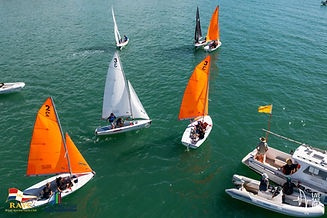
Team Racing typically consists of two teams of three boats competing head-to-head. It is a fast-paced style of racing that relies on excellent boat handling, sharp communication, and rapid tactical decision-making.
Rather than aiming to simply finish first, teams compete to achieve a winning combination of finishing places. Boats are scored 1 point for first place, 2 for second, and so on. The team with the lowest combined score wins, with a total of ten points or less required for victory.
For example, a team finishing 2, 3, 5 scores 10 points and wins, while a team finishing 1, 4, 6 scores 11 points and loses. This means that even if a sailor is winning the race, their job may not be done. A boat in first place will often sail back into the fleet to help their teammates improve their positions—turning the race into a constantly evolving tactical battle.

Team sailors have two primary tactical tools at their disposal. The first is wind control—positioning the boat between the wind and an opponent to blanket their sails and slow them down. The second is the strategic use of right-of-way rules, forcing opponents to change course or incur penalties.
These tactics come into play even before the race begins. The pre-start is often an intense and intricate manoeuvring contest, with all six boats engaged in a close-quarters, highly skilled dance to gain the upper hand before the starting signal.
Team racing is officiated by on-the-water umpires, who follow the races closely and make immediate decisions. If a boat is protested, the sailor can choose to accept the penalty straight away by completing a 360-degree turn, or wait for an umpire’s decision. If the umpires uphold the protest, a 720-degree penalty may be required; if not, a green flag signals no penalty. This real-time umpiring keeps racing fair, flowing, and highly engaging for sailors and spectators alike.
Team sailing originated in the early 20th century, particularly within schools and sailing clubs in the United Kingdom. Its emphasis on strategy, teamwork, and decision-making quickly made it a popular development pathway for young sailors, and the format soon spread internationally.
Team sailing has a strong and proud history in New Zealand, particularly within secondary schools. Introduced through school sport, it grew rapidly thanks to its accessibility and the high level of skill and excitement it offers. Over time, secondary school team sailing became a cornerstone of youth sailing development nationwide.
Today, New Zealand is internationally recognised for the depth, competitiveness, and quality of its secondary school team sailing programmes. Many sailors who go on to compete at national and international levels credit team sailing with developing their tactical awareness, boat handling, leadership, and ability to perform under pressure.
The Role of NZTSA
The New Zealand Team Sailing Association (NZTSA) exists to support, promote, and grow team sailing across the country. With a primary focus on secondary schools competition, NZTSA oversees national championships, supports regional events, and provides resources for sailors, coaches, volunteers, and organisers.
NZTSA also supports Open team sailing, ensuring opportunities exist for sailors to remain involved in the discipline beyond their school years.
At its heart, team sailing is about more than results. It builds confidence, resilience, leadership, and respect. It teaches sailors how to think ahead, work together under pressure, and contribute to something bigger than themselves—skills that extend far beyond the racecourse.


